

Since the U.S. Food and Drug Administration’s landmark approval of Luxturna in 2017, the first in-vivo gene therapy for inherited disease in the United States, gene and cell therapies have quickly moved from scientific promise to clinical reality.
Gene and cell therapies offer life-changing, and in some cases curative, breakthroughs for people living with some of the rarest conditions. While both approaches represent groundbreaking advances in modern medicine, they work in distinctly different ways:
- Gene therapies are innovative, highly targeted medications that can edit genetic materials in a patient’s affected cells and tissues.
- Cell therapies, on the other hand, are the transfer of a specific cell type into a person to treat or prevent a disease.
Why the gene and cell therapy pipeline is growing faster than ever
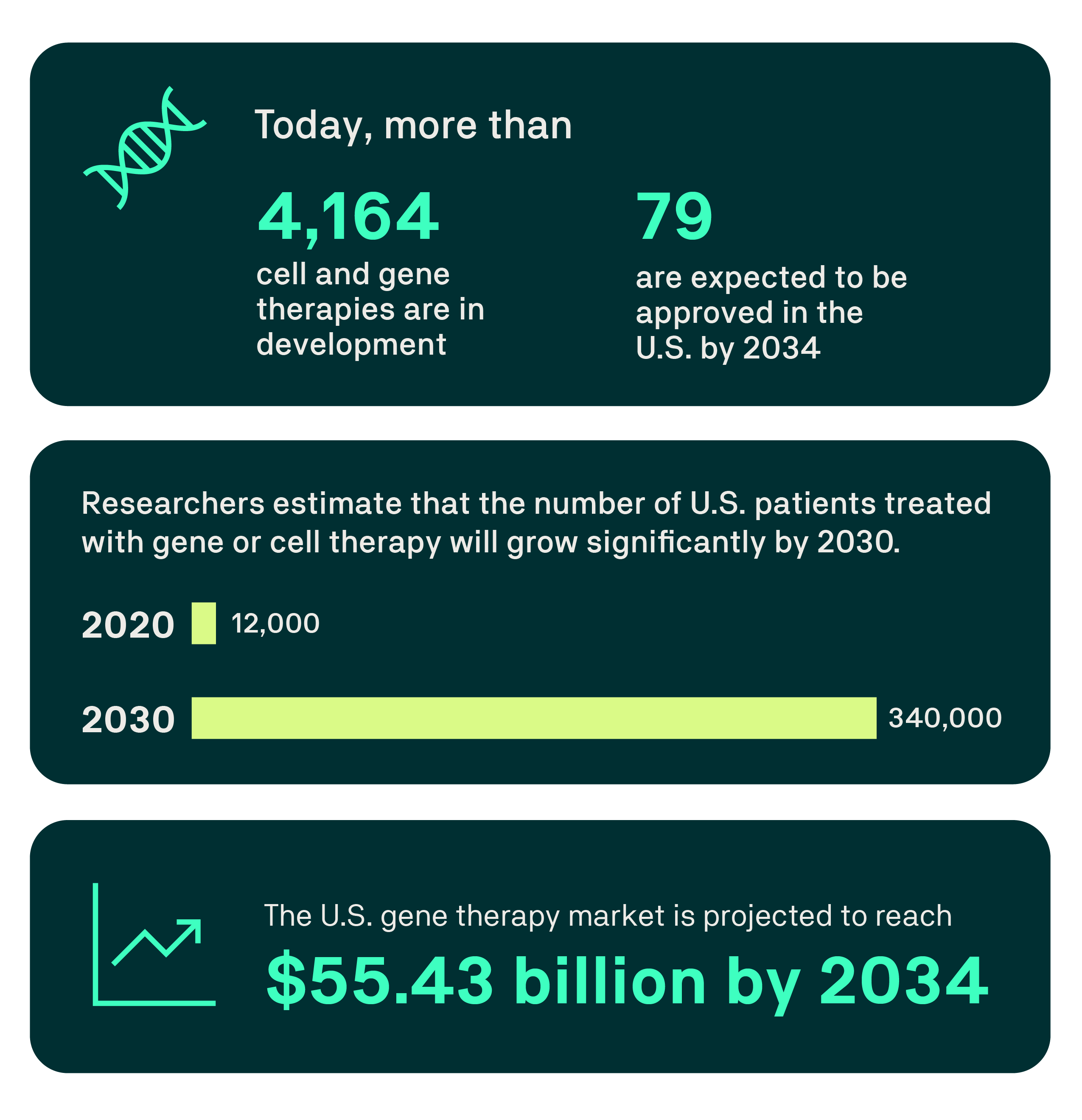
Driven by technological advances and a deeper understanding of diseases, the gene and cell therapy pipeline is larger than ever. Today, more than 4,164 gene and cell therapies are in development, and 79 are expected to be approved in the U.S. by 2034.
As this pipeline matures, patient impact is expected to grow substantially. Researchers estimate that the number of U.S. patients treated with gene or cell therapy will grow from 12,000 in 2020 to more than 340,000 by 2030, reflecting broader adoption.
In parallel, market growth is accelerating. The U.S. gene therapy market is projected to reach $55.43 billion by 2034, highlighting the need for coordinated approaches that balance innovation with long-term system sustainability.
Balancing innovation with the real-world challenges of gene and cell therapy
While this robust pipeline offers tremendous hope for people living with rare conditions, the rapid expansion of gene and cell therapies also brings a new set of challenges stakeholders must navigate:
- Financial pressure: With treatment costs ranging from $900,000 to more than $4 million, payers, patients, and qualified treatment centers face significant financial risk. Payers and providers increasingly need partners with a strong understanding of the complexities and cost burdens of these high-cost therapies.
- Operational hurdles: Providers struggle to identify clinically appropriate candidates while trying to navigate complex reimbursement requirements. Specialty pharmacies and qualified treatment centers deal with intricate dispensing, storage, and logistical needs. Manufacturers are challenged to predict patient populations and refine launch strategies in a landscape where each therapy may serve only a small subset of patients.
- Market variability: As clinical criteria continue to evolve and patient volumes shift, it becomes increasingly more difficult for employers, health plans, providers and drug manufacturers to forecast needs and plan with confidence.
These challenges are closely connected, which means they require coordinated, end-to-end solutions rather than isolated fixes.
How Evernorth improves access to gene and cell therapy with an end-to-end, clinically led approach
As the pipeline grows, Evernorth Health Services helps manufacturers, providers and payers work together so these therapies can reach the people who need them most.
At the patient and prescriber level, Accredo’s GeneAXS™ team provides dedicated, hands-on support for people navigating gene therapies. Focused exclusively on gene therapies, the GeneAXS team brings deep clinical and operational expertise to help patients, prescribers, and care teams manage prior authorizations, benefit investigations, site-of-care coordination, and other access requirements. This specialized support helps reduce administrative burden for providers while streamlining the complex steps required to initiate and manage treatment.
Across the broader ecosystem, Evernorth Therapy Link brings together the combined strengths of Accredo Specialty Pharmacy, CuraScript SD by Evernorth, Embarc Benefit Protection , and clinical trial support services. Working together, these teams help simplify the complexities of gene and cell therapies with four key strategies:
- Clinical expertise
- Data and insights
- Payer protection
- Specialty distribution
By connecting these capabilities, Evernorth helps ensure safe, efficient delivery of gene and cell therapies – so that the right patients can access the right treatments at the right time.
Preparing the health care system for the growing gene and therapy pipeline
As the gene and cell therapy pipeline continues to grow and innovation accelerates, the importance of coordinated, patient-centered systems is becoming even more important. Evernorth brings together established infrastructure, clinical leadership, and long-standing partnership to help support the safe, effective, and sustainable delivery of these therapies.
Want to learn more about the gene and cell therapy landscape? Sign up for our monthly gene and cell therapy pipeline report.


